
Building Peace from the Ground Up: Inside Somalia’s Bulsho Program
While global leaders debate security strategies in conference rooms, a quieter transformation is happening on the ground in Somalia.
It’s called the Bulsho Program—a nationwide initiative supported by the World Bank. Its premise is simple but powerful: lasting stability begins with strong communities.
When the State Is Distant, Communities Step In
In many parts of Somalia, especially those affected by conflict, the presence of formal government institutions remains limited. In their place, communities have developed their own systems—informal but effective.
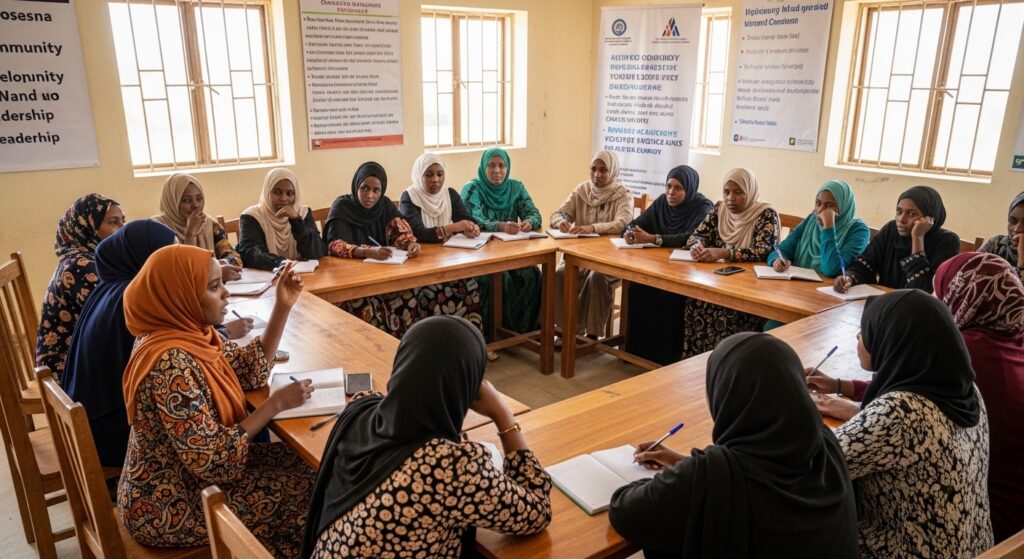
Local committees, elders, women’s groups, and youth networks often handle dispute resolution, organize services, and support livelihoods. These structures form the backbone of social resilience.
But they are not without challenges. Access is uneven, participation is not always inclusive, and divisions—especially along clan lines—can weaken collective action.
What Bulsho Is Trying to Do
The Bulsho Program builds on these existing structures rather than replacing them.
Running from 2025 to 2030, it aims to strengthen community institutions while connecting them more effectively to formal governance systems.
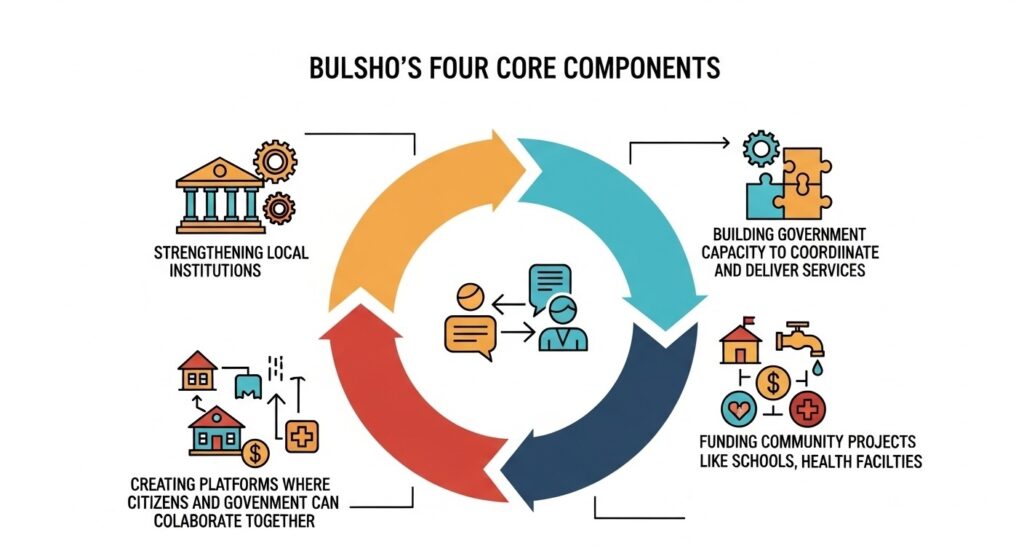
At its core, the program focuses on four key areas:
- Strengthening local institutions and district governance
- Creating platforms where citizens and government can plan and collaborate together
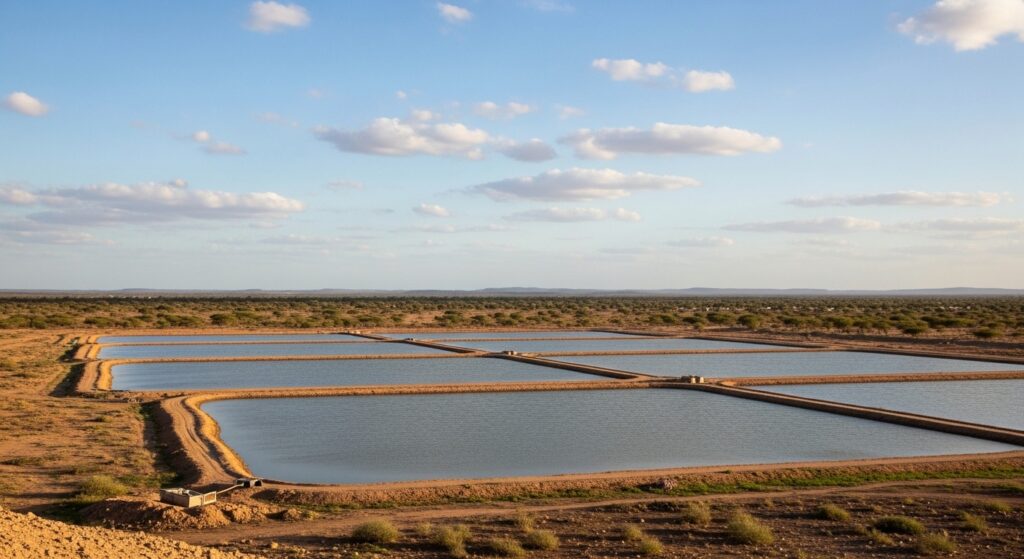
- Funding community-driven projects like schools, water systems, and health facilities
- Building government capacity to coordinate and deliver services
Rebuilding Trust Through Participation
One of the most important ideas behind Bulsho is the concept of a social contract—a shared understanding between citizens and the state.
Through community forums and participatory planning, people are directly involved in deciding priorities and holding leaders accountable. This helps rebuild trust, which is often one of the first casualties of prolonged conflict.
Inclusion Is Not Optional
For Bulsho to work, it must work for everyone.
That means actively including groups that are often left out: women, youth, internally displaced persons, and marginalized ethnic communities. Without their participation, development efforts risk reinforcing the very inequalities that fuel instability.
The program therefore places strong emphasis on inclusive engagement and equitable access to resources and opportunities.
Navigating Risk in Fragile Environments
Working in fragile contexts comes with real challenges.
Security risks can limit access. Social tensions can complicate implementation. Issues like land ownership, gender-based violence, and institutional capacity require careful management.
To address these, the program integrates safeguards—from grievance mechanisms to environmental and social risk management systems—ensuring that progress does not come at the expense of communities.
Beyond Development: Building Resilience
Bulsho is not just about delivering services. It is about strengthening resilience.
By supporting livelihoods, improving access to resources, and promoting inclusive governance, the program helps communities better withstand shocks—whether they come from conflict, climate change, or economic disruption.
A Different Way Forward
What makes Bulsho stand out is its approach.
Instead of imposing solutions from above, it starts with communities—their needs, their priorities, and their capacity to act. It recognizes that sustainable peace is not built through short-term interventions, but through long-term investment in people and institutions.
The Bigger Picture
Efforts like Bulsho may not always make headlines, but they address something fundamental: the root causes of instability.
Strong communities lead to stronger states. And stronger states contribute to a more stable region—and ultimately, a more secure world.